East Lake Luoyan Scenic Area Habitat Peninsula is located in the suburban section of the East Lake Greenway, 3 kilometers from the China 30th Anniversary Achievements Exhibition Hall, covering an area of 135,000 square meters (approximately 203 mu). It is an important stop for delegates during the conference. The original site of the peninsula was reclaimed terraced fields, with terrain higher in the north and lower in the south. The central main road serves as the ridge, surrounded by water on three sides, and connected to the greenway on the north side.
In order to reflect the principles of “respecting nature and prioritizing ecology,” the project preserved 62,000 square meters of native vegetation, including the surrounding pond cypress forest, ferns, aquatic plants near the shore, and the dense primary forest connecting the two islands to the west. By supplementing native tree species and nectar/source plants, the project improves the peninsula’s ecological landscape and creates a favorable habitat for birds and other organisms.
The project design adapts to local conditions, fully utilizing the existing terrain to enrich the shoreline forms. Taking advantage of the elevation difference at the water-land interface, five types of constructed wetlands have been carefully created: “seasonal pools,” “raised-field wetlands,” “forest wetlands,” “ecological wet ponds,” and “shallow lake shores.” These form a cluster of small micro-wetlands, building an immersive science education space themed around wetland ecological protection and restoration.
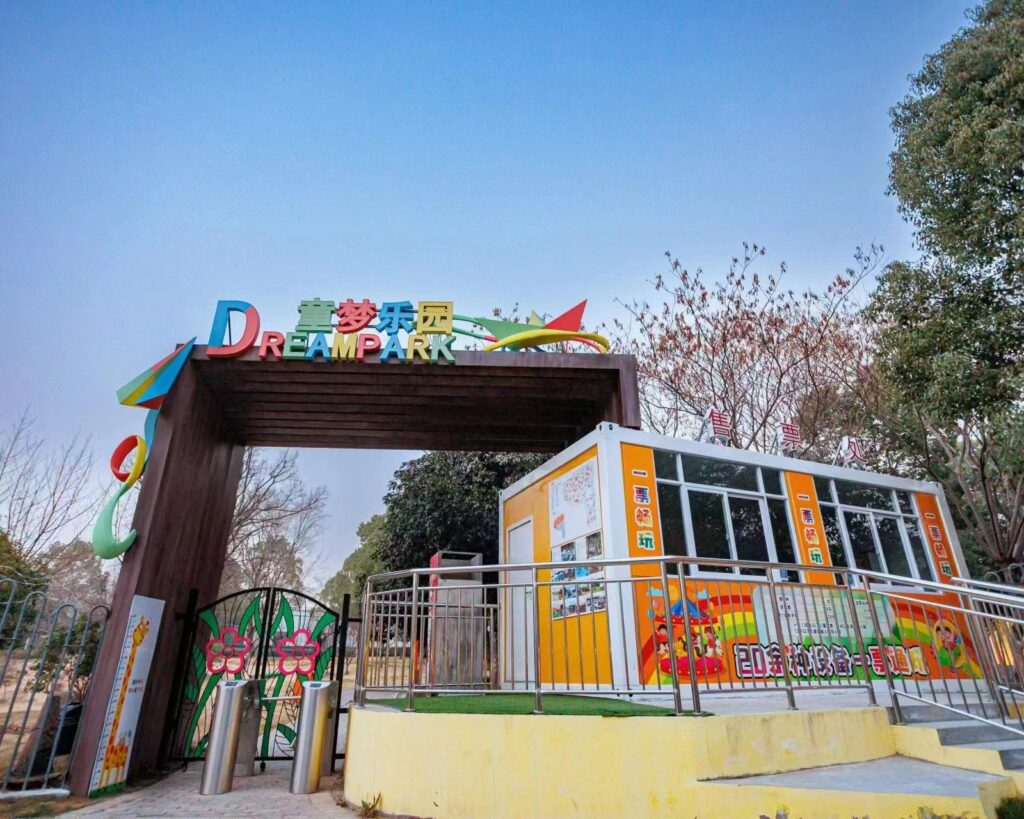
On the east side of the peninsula entrance, there is a lawn activity area, a children’s play area, and a grass-step area. The lakeside grass slope extends into the water, and the open space serves as an ecological area for concentrated visitor activities and outdoor research studies. On the west side of the entrance, there are two terraced ponds. Underwater forests are created using aquatic plants to demonstrate the purification function of plants, forming an ecological wet pond landscape and providing demonstration materials for science education.
On the east side of the middle section of the island, based on the existing cultivation patterns, the elevation differences and the original pond cypress forest are utilized to create layered terrain. Water flows through plant purification and infiltration filtration, converging to form distinctive raised-field wetlands. On the west side of the middle section, the existing ferns, mosses, and small puddles are preserved. By increasing the number of ponds and partially connecting them with the lake water, a seasonal pool wetland rich in temporal variation is formed, which also has experimental functions.
At the tail end of the island, the existing pond cypress forest and thatch are preserved. At the tip of the island, the existing shallow water areas are used to plant hygrophilous grasses such as Phragmites and other Poaceae species, creating a shallow lake shore reed landscape.
Opening hours: 08:30-18:00 all year round.
Preferential policies:
Children: Free for children below 1.2m (excluding 1.2m) in height.
Elderly: Free for those aged 65 (inclusive) and above; half price for those aged 60 (inclusive) to 65 (excluding) with a senior citizen certificate or ID card.
Military personnel: Free for active-duty soldiers, disabled military personnel, veterans, and retired military cadres.
Disabled persons: Free for severely disabled persons and one accompanying caregiver.
Students: Half price for full-time undergraduate and below students (excluding adult education and postgraduate students) with a student ID.